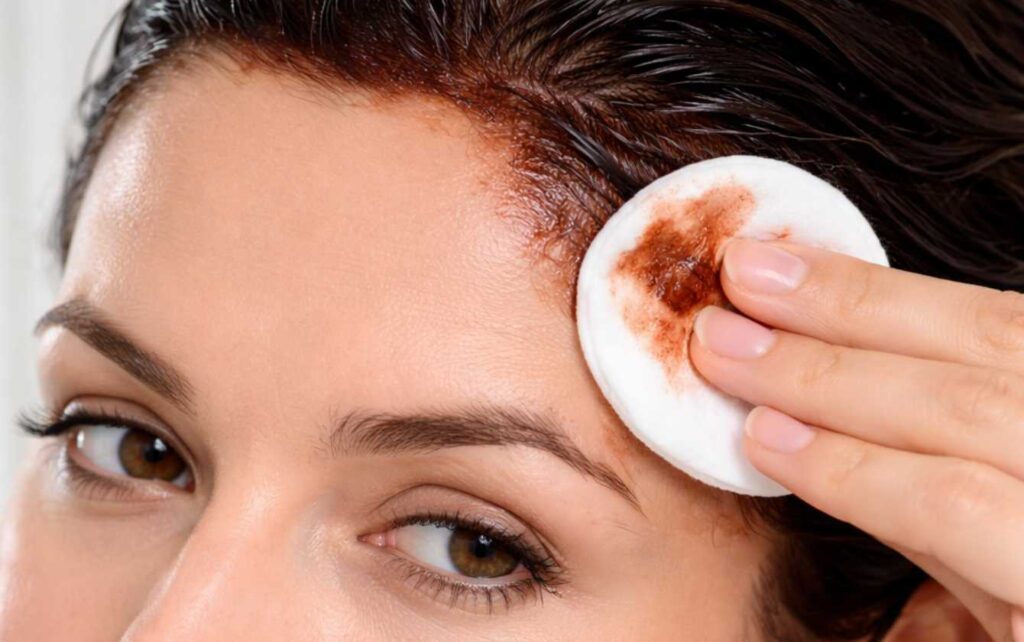
Hair dyeing is a fun way to change your look, and in certain instances, it is not just your hair that is on. It may easily get on your skin, especially around your forehead, ears, neck, and hands. These stains can seem messy and hard to remove unless one is aware of the proper process involved.
The good news is that the stains of hair dye on the skin are not usually lasting and can be removed at home without any harm. Here in this blog, you will learn the simple, hassle-free methods of removing the color of your hair from your skin using the household products listed below.
Why Hair Dye Stains The Skin
The hair dye contains strong pigments and chemicals that are meant to remain in your hair. When in contact with your skin, these pigments may be attached to the upper layer of your skin cells.
Some causes of stains include:
- Dye application without some protective measures.
- Not cleaning spills quickly
- Having hair of dark or heavy colour.
- A sensitive or dry skin that takes up color more rapidly.
Fear not, however, these are not permanent stains.
Remove Hair Dye from Skin: Step-by-Step Guide
The hair stains simply fade away, within 1-3 days, through natural renewal. However, if you are in a great hurry to do it, you will find a lot of easy-to-follow procedures to do it at home.
The majority of efficient ways of removing hair coloration from the skin are.
Soap and Warm Water
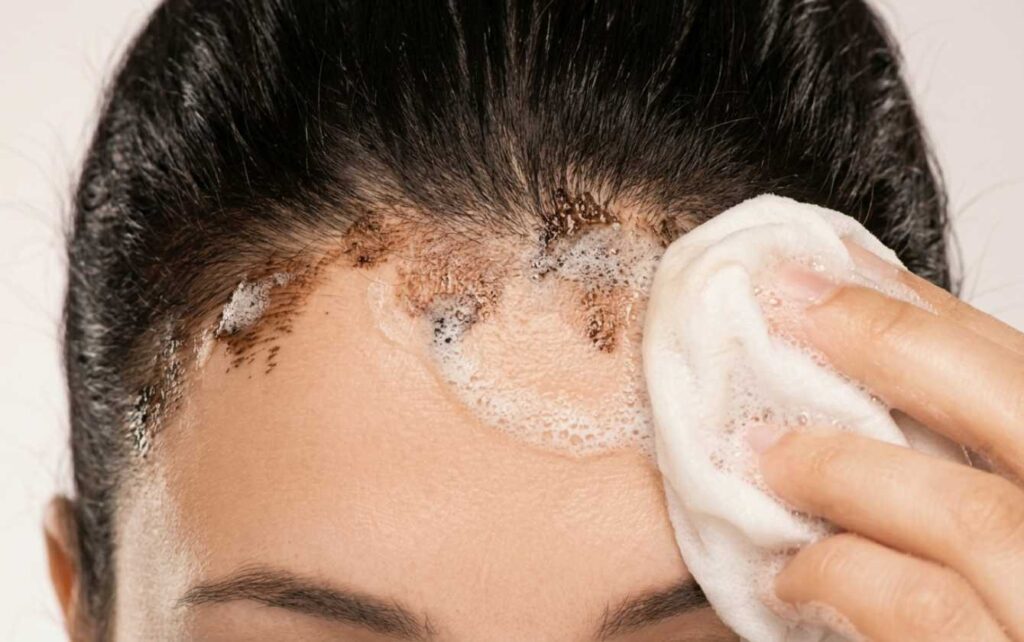
The simplest of things is always a good place to start.
Clean the stained spot with warm water and soap. Do not use anything harsh, like a finger or a soft cloth. This is desirable when the stain is fresh.
Wash again 2-3 times as necessary.
Makeup Remover
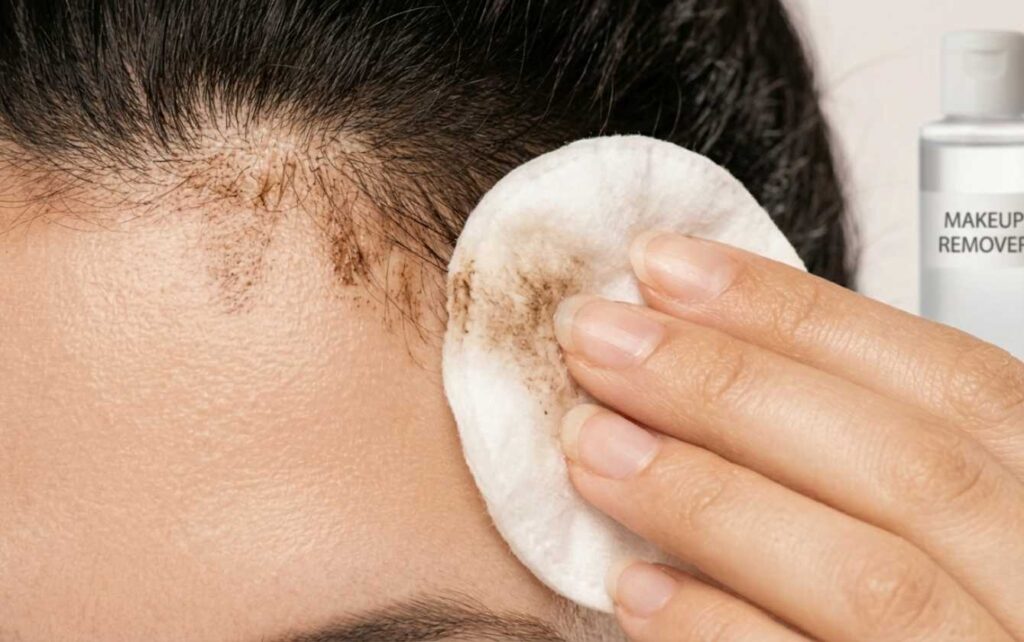
Makeup remover is very effective because it is set to remove the deep pigments.
Take a cotton pad, apply some makeup remover, and rub the stained area. You will find that the color is starting to fade away.
This is not a harmful technique to sensitive body parts like the face.
Oil (Baby Oil or Coconut Oil)
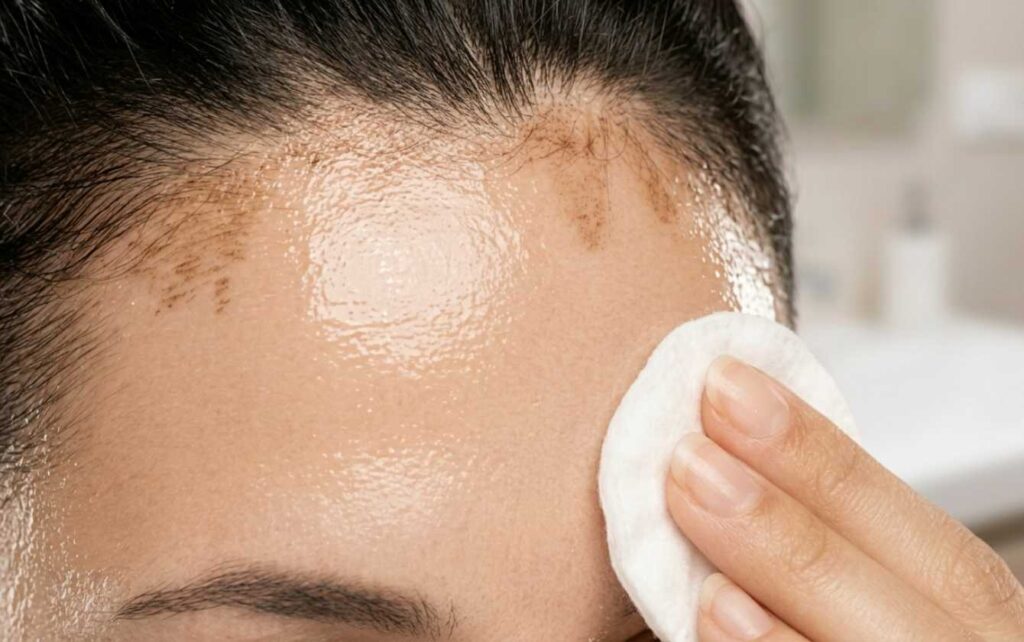
The dye can be extracted by applying oil to your skin and then wiping it away.
Wipe the stain with baby oil/ coconut oil. Leave it for 5-10 minutes. Then rub a little off with a cotton pad or cloth and run under warm water.
This is a very soft procedure, and your skin is hydrated.
Baking Soda and Dish Soap
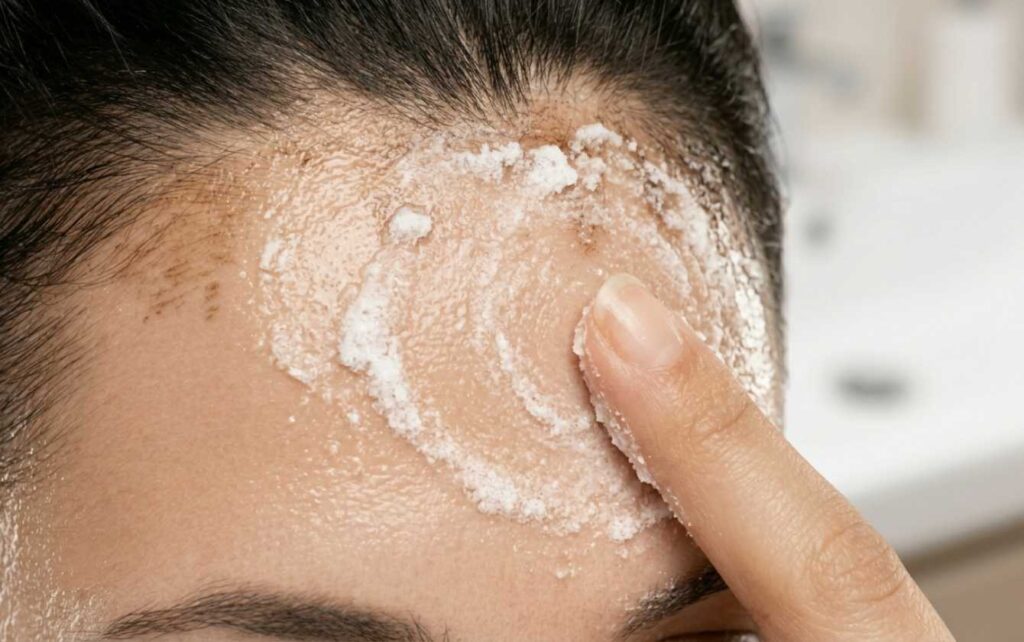
It is an aggressive method when it comes to adamant stains. Add a bit of dish soap to baking soda to create a paste. Place it on the dirty area and massage it in a circular motion.
Wash off with warm water.
Do not be too rough when scrubbing, particularly on the face.
Toothpaste (Non-Gel)
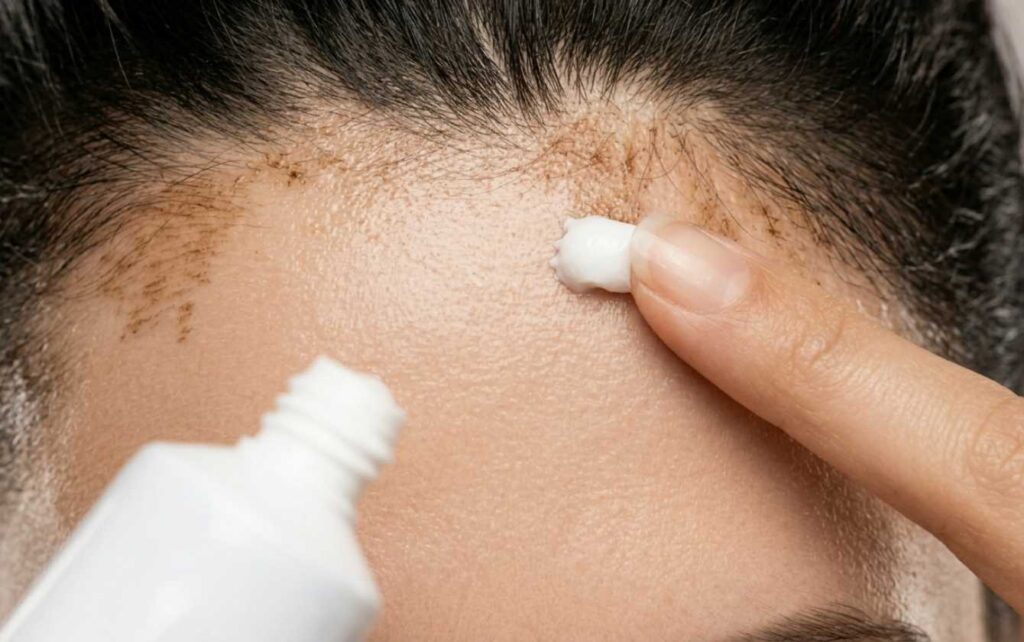
There is a mild cleaning agent in toothpaste that may be used to remove stains.
Incidentally, put a little non-gel toothpaste on the stain. Rub with fingers or a soft brush. Wait a minute, and take it off.
The method works when dealing with small regions.
Vinegar Solution
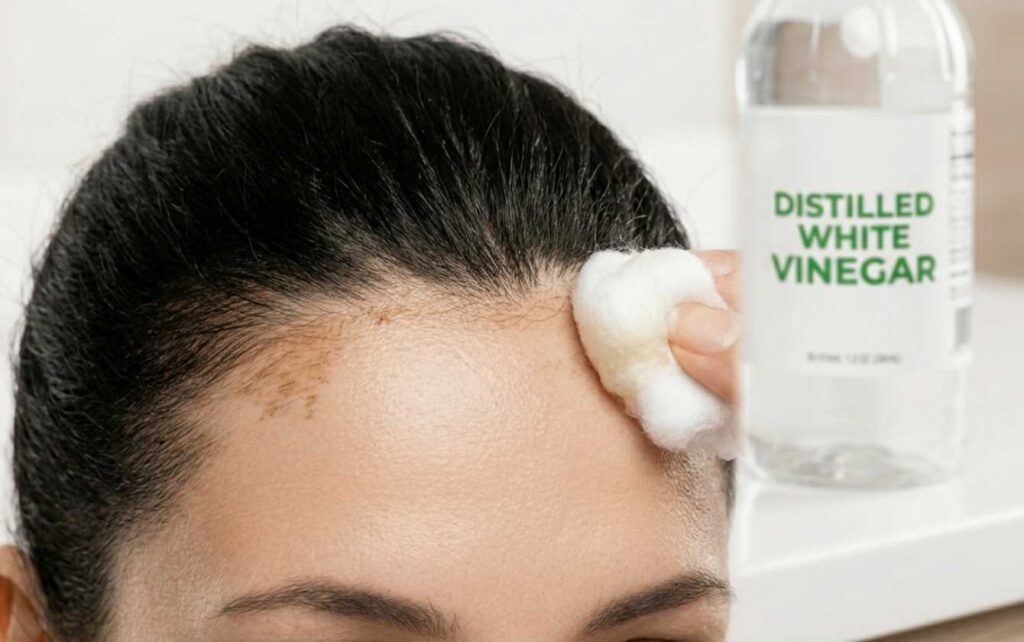
It can be used to remove stains with vinegar, a natural cleaner.
Combine vinegar and water in equal amounts. Wet a cotton ball with the solution and rub the stain.
Do not leave vinegar on your skin; rinse it off.
Rubbing Alcohol (Use Carefully)
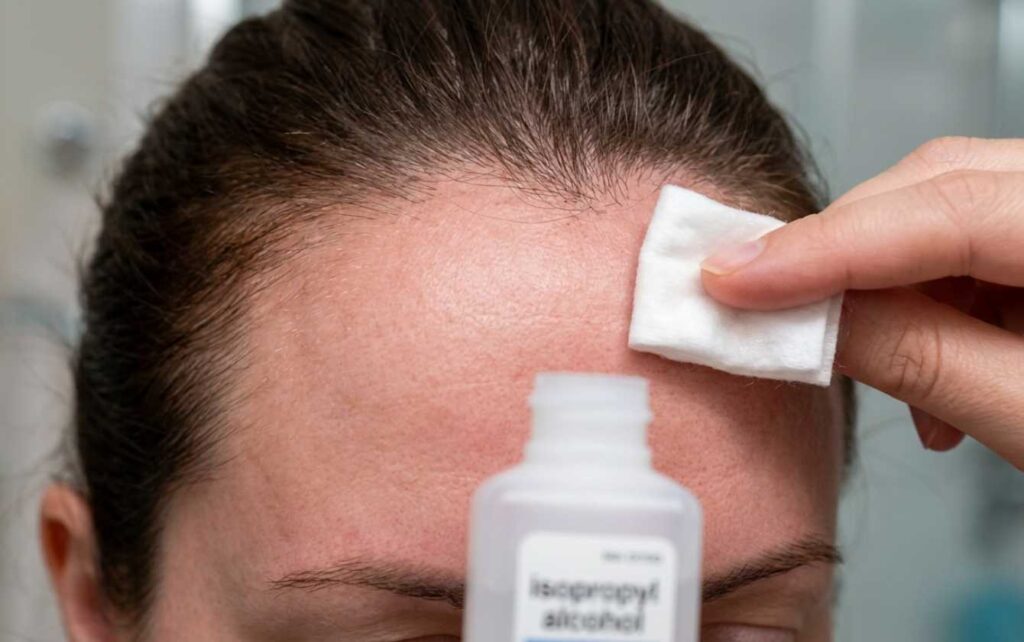
Rubbing alcohol is very handy, but it must be used sparingly.Take a little, apply it to the stained area with a cotton pad. Not too much of it, and not on sensitive areas.
Clean your body and rub some moisturizer on it.
Petroleum Jelly (Vaseline)
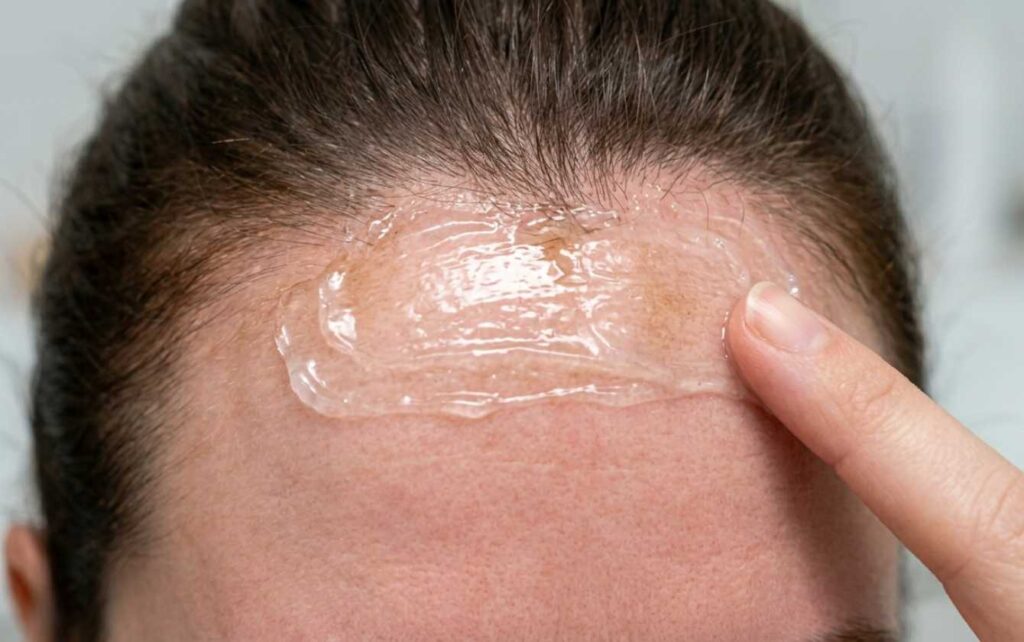
Petroleum jelly accomplishes this by fading the color of your skin. Apply the stain in a thick layer and leave it without any further treatment for several hours or nights. Then wipe it off with a cloth.
It is the least risky and least invasive procedure.
- Dying To Get Rid of Hair Dye.
- Always respond promptly to a stain.
- Light methods of doing things instead of scrubbing too hard.
- Wipe your skin with water.
- Do not use potent chemicals on your face.
- Silverado prevention Skin Stains of Hair Dye.
- Prevention is always better than a cure. Here are some easy tips:
- Before Coloring apply Oil or Petroleum Jelly.
Apply a coat of thinness around your hair, ears, neck, etc. This creates an obstacle and avoids adhesion of the dye.
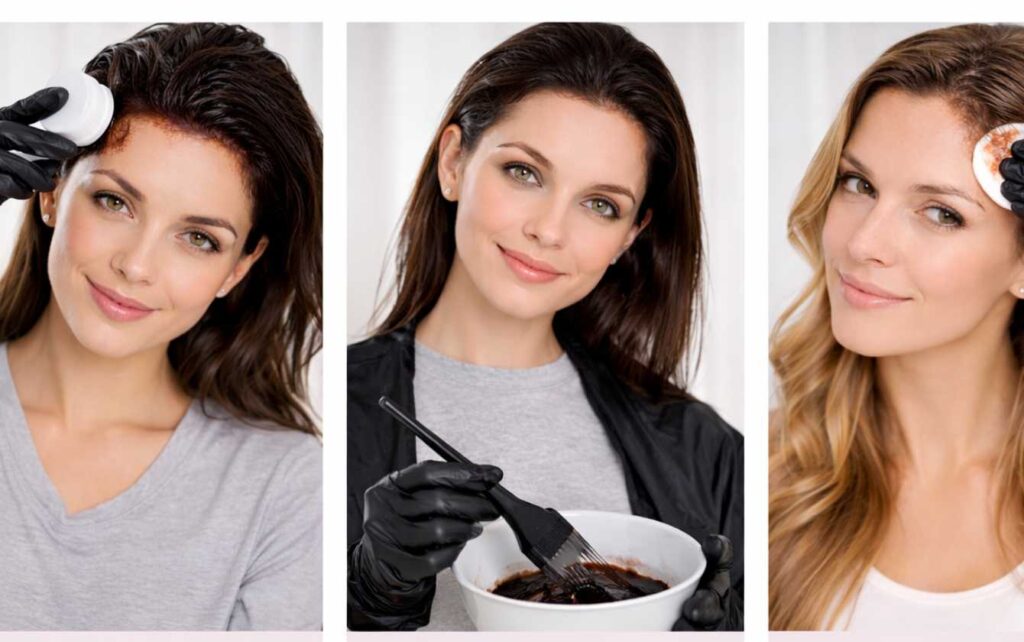
Wear Gloves
Keep gloves on when applying hair dye, as it will leave a mark on your hands.
Use Old Clothes
Hair dye, too, can leave a discolouration, so be sure to put on something old.
Clean Immediately
And should the dye come to your skin, wipe it off at once before it dyes.
Mistakes to Avoid
- Little errors compound the stains that most of us make:
- Washing excessively (this may also irritate the skin)
- Tough chemicals are being applied to the face.
- Ignoring stains for too long
- Combining too many techniques simultaneously.
- Motherly ways should be tried first.
Also, wondering why your hair becomes oily so quickly? Learn the common causes and simple scalp care tips in our detailed guide on why my hair gets oily so fast to better understand your hair health.
When to Be Careful
Do not use strong products like alcohol or nail polish remover unless you have sensitive skin, are allergic to some things, or even have cuts on your skin.
Should you be irritated, stop everything and put water on your skin.
Natural Fading Over Time
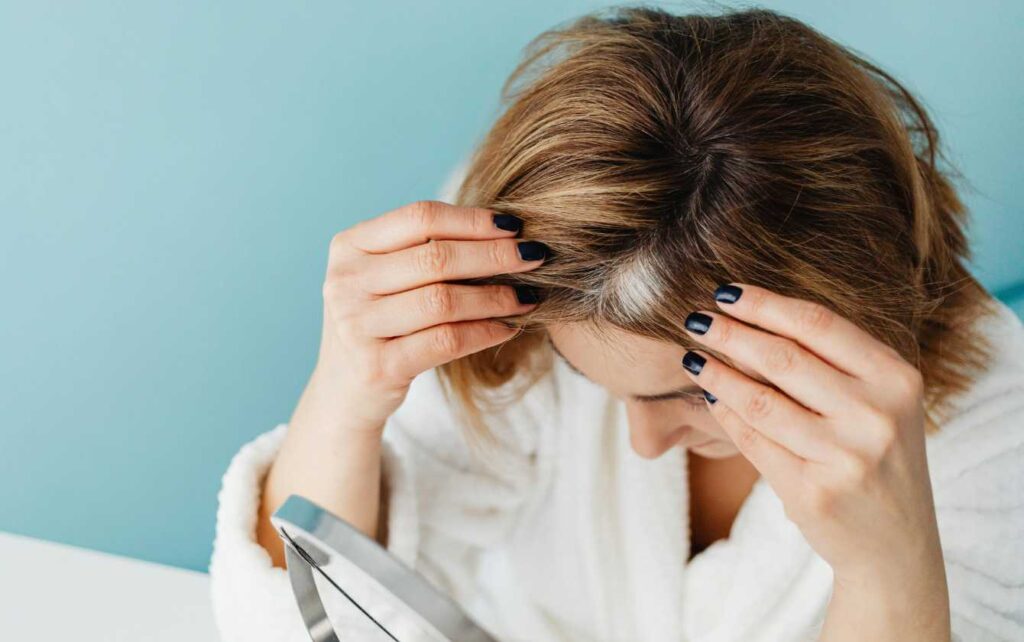
You need not thoroughly cleanse your skin, but even without doing this, your skin will do it. The cells on the skin that were killed are then rubbed away, and new skin is produced that slowly takes away the dye.
While cleaning up stains is important for your skin, maintaining a healthy environment for your hair is just as vital. If you find that frequent coloring or washing is leading to buildup, learn more about balancing your scalp in our guide on why hair gets oily so fast.
Then, when the stain is slight, wait, and it will fade.
Final Thoughts
It is quite frequent to get hair dye on your skin, although that is not a big problem. Therefore, you can use the unproblematic techniques discussed in this blog to remove hair color from your skin at home.
Start with gentle options like soap, oil, or makeup remover. In case the stain is intense, baking soda or toothpaste should be used. Always care about the skin and do not scrub it hard. The next time you paint your hair, put it on your skin first. This will save time and effort in the future.
For more helpful tips, keep visiting the Beauty Care Guide.